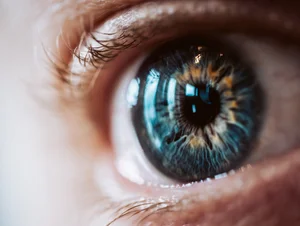
The Return to Rhythm
Over time, I’ve come to understand how deeply we are connected to rhythm.
Not just in a poetic or abstract way…
but in a very real, physiological way that impacts how we feel, function, and heal.
Circadian rhythm is often described as the body’s internal clock, a 24-hour cycle that influences sleep, energy, digestion, hormones, and more.
And while that’s true…
What I’ve come to understand is that it’s not just a clock.
It’s a relationship.
The Body’s Natural Timing
Every cell in the body carries its own sense of timing.
There’s a natural rhythm that guides when we feel alert, when we feel tired, when we digest, when we repair.
And this rhythm is constantly being influenced by our environment, especially light.
Natural light, particularly in the morning and evening, plays a key role in regulating hormones like cortisol and melatonin.
Morning light helps signal to the body:
it’s time to wake, to be alert, to begin the day.
Evening light, or the absence of it, signals:
it’s time to slow down, to rest, to prepare for sleep.
This is something our bodies were designed to do in sync with nature.
Where Things Shifted for Me
For a long time, I didn’t fully understand how much this mattered.
Like many people, I lived in a way that was often disconnected from natural rhythm, artificial light, inconsistent sleep, pushing through fatigue, staying in a constant state of “on.”
And over time, I started to feel it.
Not just in my energy…
but in my nervous system, my sleep, my ability to feel truly rested.
That’s when I began to pay closer attention.
Stress and Rhythm
One of the biggest things I’ve learned is how much stress impacts circadian rhythm.
When the body is living in ongoing activation, it loses its sense of rhythm, making it difficult to settle into the cycles it was designed to follow.
Cortisol, which is meant to rise in the morning and gradually fall throughout the day, can become dysregulated.
Melatonin, which supports sleep and repair, can be delayed or disrupted.
And the body starts to lose its sense of timing.
Not because it’s broken…
But because it’s trying to adapt.
What I Come Back To
Over time, I’ve found that supporting my circadian rhythm doesn’t require perfection.
It comes back to simple, consistent choices.
For me, that looks like:
getting natural light in my eyes in the morning
allowing myself to slow down as the day winds down
being more mindful of light exposure at night
listening to my body when it’s asking for rest
Even something as simple as stepping outside for sunrise…
or pausing to notice the shift into evening…
can gently bring the body back into rhythm.
Not forcefully.
But naturally.
A Different Way of Looking at It
I no longer see circadian rhythm as something I need to control.
I see it as something I support.
Something my body already knows how to do…
when I give it the right conditions.
Because the body is always moving toward balance.
It’s always trying to regulate, to repair, to restore.
Final Thoughts
What I’ve come to understand is this:
Health isn’t just about what we do.
It’s about how we live in relationship with our body…
and with the natural rhythms that support it.
And sometimes, it really is as simple as:
Stepping outside.
Taking a breath.
Watching the light change.
One small choice at a time…
we come back to balance.
🌱Happy healing,
Leslie